A go-kart racing suit (karting suit, kart suit) is protective gear built for karting heat, movement, and track contact. It helps reduce abrasion and friction burns in a slide while improving comfort during steering, braking, and cornering. The best kart racing suit fits stable in a seated driving position, stays breathable, and avoids rubbing at the collar, cuffs, and inner thighs.
Some events require a CIK-FIA / FIA karting-approved suit, often referenced today under FIA Standard 8877-2022 with Grade 1 and Grade 2 protection levels. When rules apply, buyers should check the kart suit homologation label and authenticity details, such as a kart suit hologram, and verify the model on the official technical list when required.
Oscar Racewear serves worldwide shoppers with team-inspired styles, including replica kart suit options for practice, track days, and everyday karting. This guide explains a practical kart suit sizing guide, how to use a kart suit size chart, and how to choose between single-layer vs multi-layer kart suits based on heat, comfort, and durability.
Go Kart Racing Suit Buying Checklist for Fast, Correct Choices
A go-kart racing suit purchase goes right when the buyer decides in this order: rules, fit, heat control, then durability. Rules matter because some events require specific gear labels, while casual tracks may not. Fit matters because karting is done seated, and standing fit can mislead. Heat control matters because overheating causes fatigue and slower reactions.
Durability matters because high-wear zones like knees and the seat can break down fast in weekly use. This checklist keeps the decision simple, reduces sizing mistakes, and helps worldwide shoppers avoid delays caused by exchanges. Once these basics are correct, choosing a style becomes easy, whether the buyer wants a clean team look or a minimal design.
- Confirm track or series requirements before ordering.
- Choose breathable comfort for indoor and hot weather sessions.
- Use a seated-position test for kart suit sizing.
- Check reinforced knees, seat, and seam strength.
- Pick the design after the function is confirmed.
Go Kart Racing Suit Benefits for Safety, Comfort, and Performance
Karting combines speed, heat, and constant steering load. Regular clothes can rub, snag, and hold sweat, which makes drivers uncomfortable and distracted. A go-kart racing suit adds an abrasion-resistant outer layer and a smoother inner lining to reduce irritation during movement. Better suits also use stretch zones and shaping that fit a driving posture, so arms reach forward without shoulder bind and knees bend without pulling.
This matters for beginners learning control and for experienced drivers doing long sessions. Comfort is not a luxury in karting; it is a stability feature. When a suit stays quiet on the body, the driver can focus on braking points, throttle control, and smooth lines. That is how gear supports performance without trying to “sell speed.”
- Reduces friction burns from track contact
- Improves mobility for shoulders, elbows, and knees
- Helps manage sweat and heat during long runs
- Reduces distractions that cause mistakes
Go Kart Racing Suit Safety Standards and Track Rules Worldwide
Worldwide karting rules vary by venue and event level. Some tracks accept any karting suit that offers basic abrasion protection. Competitive series may require specific safety labels, approved standards, or gear checks that depend on class and age group. A buyer should never assume a “f1 race suit” label means it will pass inspection.
The correct approach is to read the event rules and confirm the exact requirement for that category. If the rulebook is unclear, the organizer should be asked before ordering. This prevents wasted money and avoids last-minute gear issues on race day. For gift buyers, this step is even more important because the driver may have rules that the buyer does not know. When in doubt, function and compliance come first, style comes later.
- Read the rulebook for the exact class and age group.
- Confirm whether approval labels are required.
- Keep tags and label details for inspection.
- Ask the organizer if anything is unclear.
Go Kart Racing Suit Materials, Stitching Quality, and Abrasion Zones
Material and construction decide how a suit feels after ten sessions. A durable go-kart racing suit uses a dense outer shell for abrasion resistance and a smooth liner for comfort. High-wear zones—especially knees, seat, elbows, and forearms—should have extra reinforcement because they take repeated stress from driving posture and kart contact. Stitching matters as much as fabric.
Weak seams can fail even when the material looks fine, especially across shoulders, hips, and inner thighs. Buyers should look for reinforced seams, tidy seam finishing, and a strong zipper with a protective flap. Stretch panels should be placed where the body moves during steering and braking, not only where they look sporty.
The best build feels strong but still flexible in the seat.
- Reinforced knees and seat for long-term wear
- Strong seams in stress zones (shoulders, hips, inner thigh)
- Smooth lining to reduce rubbing and hot spots
- Durable zipper and protective zipper flap
Go Kart Racing Suit Fit and Kart Suit Sizing Guide
A go-kart racing suit must fit best in a seated driving position. Standing fit can look correct and still fail in the kart. The right fit feels snug, but it does not restrict breathing or shoulder rotation. If the suit pulls at the collar when the driver reaches forward, it is too small, or the cut is wrong. If the fabric balloons at the waist or bunches behind the knees, it is too large and will distract under braking.
Sizing should be checked with the same gear used on track, especially a base layer and rib protector. This reduces returns and makes comfort predictable. For worldwide shoppers, getting sizing right the first time matters because exchanges take longer. Once the fit is correct, the driver can choose style and color without sacrificing comfort.
Sizing checklist
- Fit should be tested seated, not standing
- No collar pressure on the throat
- Full shoulder rotation during steering
- No bunching behind knees in a bend
Breathable Go Kart Racing Suit Features for Hot Weather and Indoor Tracks
Heat management is a practical performance issue. Indoor tracks often run hot, and outdoor tracks can be intense in summer. A breathable go-kart racing suit helps by reducing sticky contact and improving airflow in high-sweat zones. Buyers should look for moisture-handling liner fabric and ventilation panels placed where the body sweats most, such as underarms and inner thighs.
Comfort also depends on collar finish and cuff finish, because scratchy edges become painful over time. A lightweight go-kart suit with smart ventilation often feels better than a thicker build with limited airflow, especially for long sessions. For many drivers, cooling plus correct fit is the most significant comfort upgrade after gloves and shoes. The goal is steady comfort, so focus stays on driving, not on heat.
- Vent panels in high-sweat zones (underarms, inner thighs, back)
- Moisture-handling liner for sweat control
- Soft collar and cuffs to reduce irritation
- Stretch zones that reduce steering fatigue
Single-Layer vs Multi-Layer Go Kart Racing Suit Options
Suit type should match driving frequency and conditions. Single-layer kart suits are often lighter and flexible, which suits casual sessions and many indoor tracks. Multi-layer builds can feel more robust and handle repeated wear better for weekly practice. Some drivers also shop replica kart suits for a team-style look, and the same rule still applies: build quality and fit decide comfort, not the graphic.
For frequent drivers, durability matters most at knees, seat, and seams, because those areas see the most stress across a season. For casual drivers, comfort and ventilation usually matter more than maximum reinforcement. A buyer who trains often should treat a suit like tires: consistent use needs stronger construction. When unsure, choose based on how many sessions per month the driver expects.
- Casual use: prioritize comfort and breathability
- Weekly practice: prioritize reinforcement and seam strength
- Hot climate: prioritize ventilation and a lighter feel
- Style choice: after fit and function are correct.
Oscar Racewear Go Kart Racing Suit Buying Tips for Worldwide Shoppers
Worldwide orders work best when sizing and timing are handled upfront. Buyers should measure and use the product size chart instead of guessing based on streetwear. Kart suits are meant to fit closer, so “extra room for comfort” often becomes bunching in the seat. Buyers should also confirm what is included in the listing because photos may show gloves or shoes sold separately.
For time-sensitive events, ordering early is the safest move because exchanges take longer across borders. After delivery, buyers should perform the seated fit test immediately and keep tags on until fit is confirmed. This reduces delays and avoids missing track dates. Once sizing is correct, shoppers can choose the replica style or color that fits the driver’s taste.
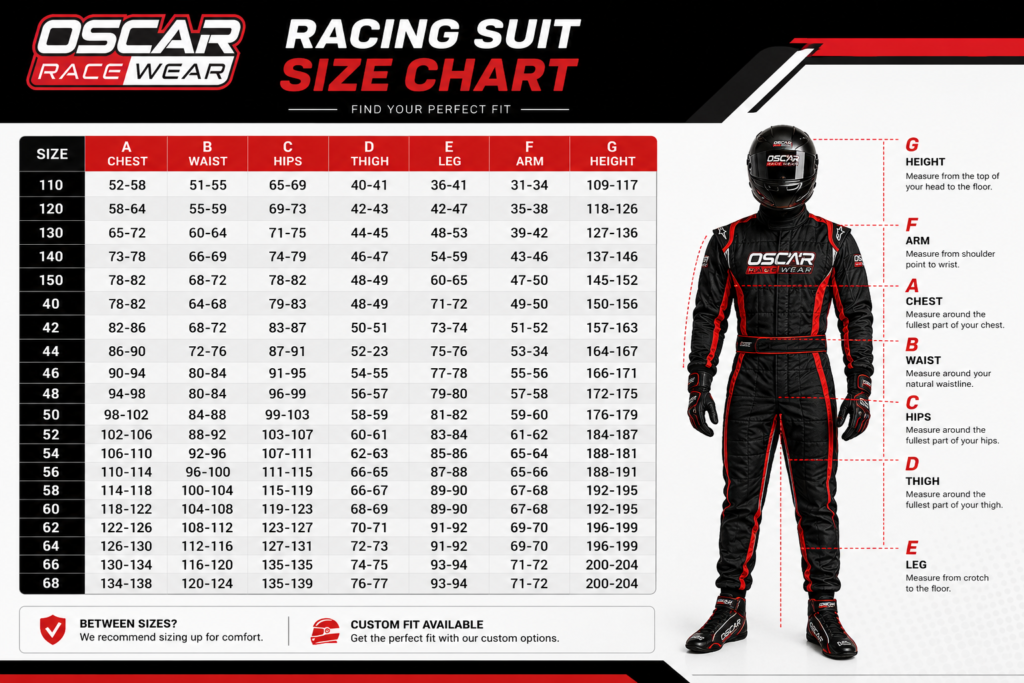
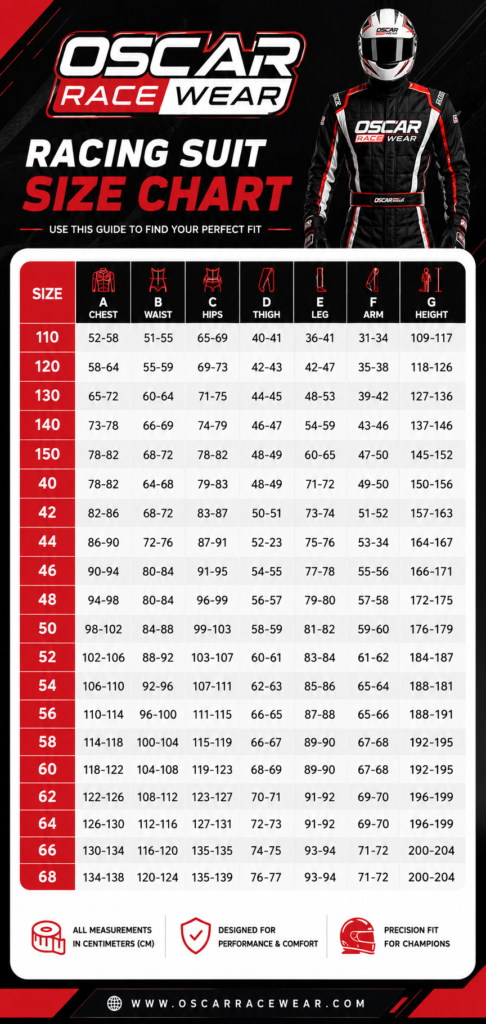
- Measure and compare to the Oscar Racewear size chart.
- Confirm what is included in the product listing.
- Order early for events and travel schedules.
- Test fit immediately and keep tags until confirmed.
Go Kart Racing Suit Care, Cleaning, and Storage
Good care keeps a go-kart racing suit comfortable and extends its life. Washing should be gentle because harsh chemicals can weaken fibers and reduce stretch. Mild detergent and a gentle cycle—or hand washing—are usually safest. Bleach should be avoided. Air drying is preferred when possible because high heat can reduce material life and affect stretch zones.
After a session, the suit should dry thoroughly before storage to prevent odor and fabric breakdown. Storage on a hanger in a cool, dry place helps maintain shape. Regular inspection matters for frequent drivers: check seams, knees, seat panels, and the zipper area. Minor repairs done early prevent larger failures later. Clean gear is also more comfortable because the liner stays softer and less abrasive over time.
- Mild detergent, gentle wash, no bleach
- Air dry when possible; avoid high heat
- Dry thoroughly before storing.
- Hang in a cool, dry place.
- Inspect seams, knees, seat, and zipper.
How to Measure for a Kart Suit?
Accurate measurements make kart suit sizing easier and reduce mistakes. Height and weight alone are not enough because body shape differs. The buyer should measure chest and waist with a soft tape, then compare those numbers to the size chart. The tape should sit flat and snug, not tight. The chest is measured around the fullest part with arms relaxed.
Waist is measured around the natural waistline, not the belt line. Height should be measured barefoot against a wall. If measurements fall between sizes, the buyer should choose based on seated comfort and shoulder movement. For a more athletic build, chest and shoulders often decide the best size. For taller drivers, torso length matters, so height should be taken seriously. Good measurements are faster than returns.
Measurement checklist
- Chest: fullest part, arms relaxed
- Waist: natural waist, tape flat
- Height: barefoot against a wall
- Between sizes: prioritize seated mobility
Conclusion
Choosing the right go-kart racing suit should feel simple. Start by matching the suit to the driver’s real use case: indoor or outdoor karting, casual sessions or frequent practice, and any track rules that apply. Then lock in sizing the correct way—by testing fit in a seated driving position with the same base layer and rib protector the driver will wear. A suit that stays comfortable at the collar, shoulders, and knees will reduce distractions, heat stress, and fatigue during long runs.
After fit and comfort, focus on build quality that lasts: reinforced knees and seat panels, strong stitching, and a reliable zipper system. Once those essentials are correct, choosing the Oscar Racewear style becomes easy because the suit will look good and feel right at the same time. A well-chosen suit should stay stable, breathable, and flexible from the first session through repeated track days, which is what makes the purchase worth it.
(FAQs)
What is the best go-kart racing suit for beginners?
The best beginner suit is the one that feels right in the seat: no shoulder strain when steering, no neck rubbing, and no heat misery after a few laps. Prioritize comfort and mobility first—because if you’re fighting the suit, you’re not learning.
What features matter most in a go-kart racing suit?
You want three things: easy shoulder movement, soft collar/cuffs, and reinforced knees/seat—plus decent ventilation if you run in indoor or hot conditions. Ignore flashy styling; it doesn’t make you faster, just louder.
How should a karting suit fit in the seated driving position?
Snug and stable, not tight. In a seated test (zip up, reach forward like stiff steering, lift knees like braking), it should not pull across your upper back, crotch, or behind your knees. If it does, it’s the wrong size or cut.
What should I wear under a go-kart suit for comfort and sweat control?
A thin, fitted base layer. It reduces chafing, manages sweat, and keeps the suit from feeling sticky. If you wear a rib protector, test the suit with it on—because it changes everything about torso fit.
How should a karting suit fit in the seated driving position?
It should feel snug and stable, not tight. Do a seated test: zip up, reach forward like stiff steering, lift knees like braking—your suit should not pull at the upper back, crotch, or behind the knees. If the collar presses your throat or you can’t breathe comfortably, the fit is wrong.
Is a karting suit fireproof or just abrasion-resistant?
Most karting suits focus on abrasion protection and mobility, not fire protection. If your event requires fire resistance, follow the exact rule wording and buy gear rated for that use—don’t assume based on marketing. For typical karting, fit and ventilation usually matter more to safety than “fireproof” claims.