Karting suit design in 2026 is no longer “pick a suit, pick a color, done.” Buyers worldwide want a go-kart racing suit that does three things at once: protects against abrasion, stays comfortable in heat, and allows full movement in the seated driving position. That mix is harder than it sounds, and it’s exactly why modern karting suits look and feel different from older, bulkier builds.
If you’ve ever finished a session with a raw neck, burning inner thighs, or shoulders that feel like they’ve been lifting weights, you’ve experienced bad design—not “normal karting discomfort.” A well-designed kart racing suit reduces distractions and fatigue. That directly improves consistency, confidence, and control, whether you’re doing indoor sessions, outdoor practice, or racing with scrutineering checks.
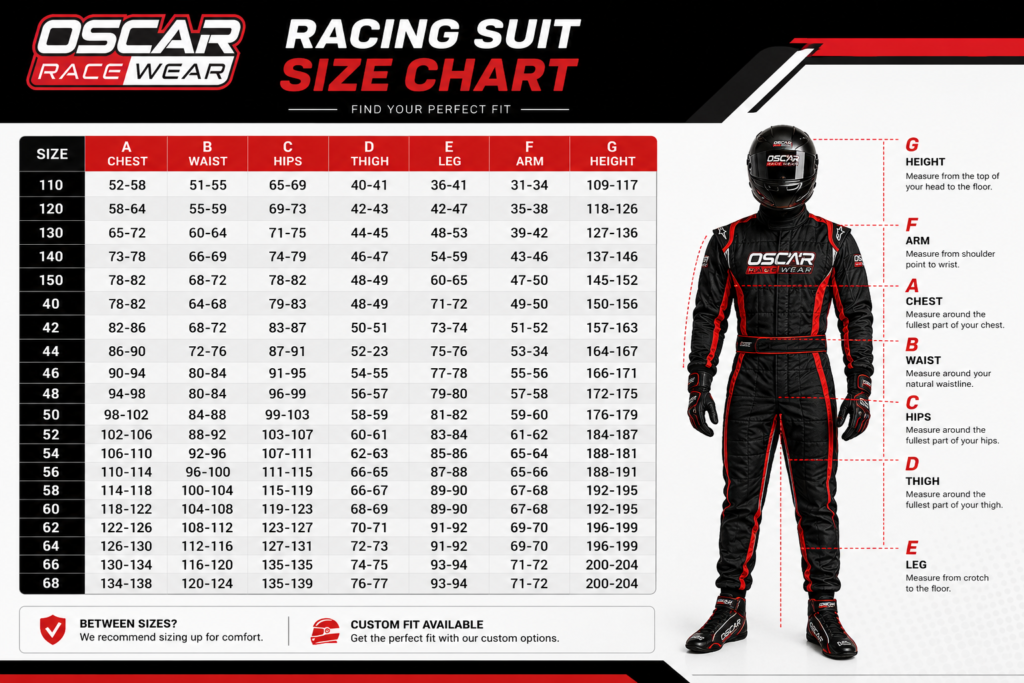
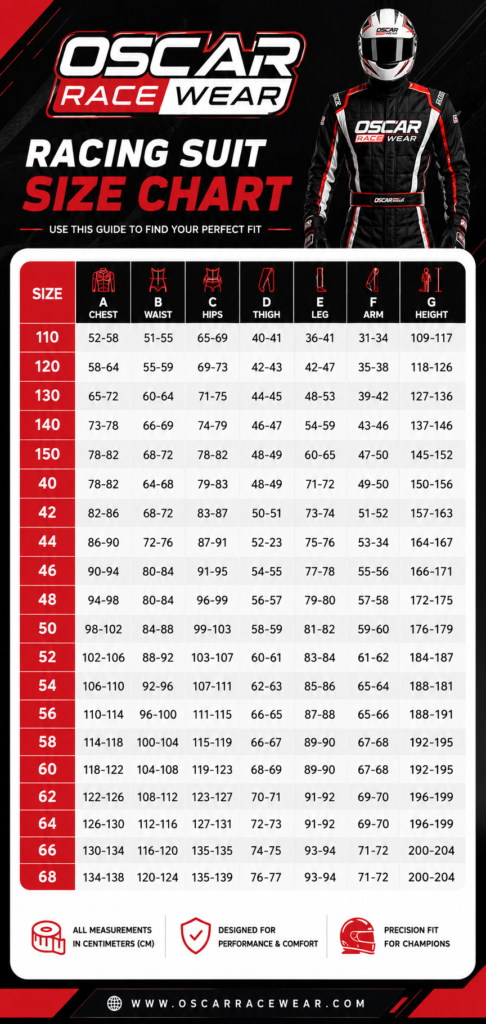
This guide is written for shoppers who want practical answers. In the following sections, you’ll learn what “good design” looks like in 2026, how to choose between lightweight and heavy-duty builds, how to size a karting suit properly (including with a rib protector), what to wear underneath, and how to avoid buying something that looks legitimate online but disappoints the moment you zip it up.
What “premium” karting suit design mean in 2026?
A premium kart suit in 2026 combines four things that usually compete with each other: breathable ventilation, lightweight comfort, flexible movement, and durable construction. The best designs solve those tradeoffs with smarter pattern cuts and materials rather than simply adding thickness.
Here’s what “premium” really looks like in the real world:
- It fits well when seated, not just when standing.
- It stays comfortable when you sweat.
- It has reinforced knees and a reinforced seat, so it lasts.
- It uses durable stitching and a strong zipper, so it survives repeated use.
- It has a soft collar and smooth cuffs, so it doesn’t rub.
- It’s easy to clean and quick to dry, especially if you drive often.
If a suit doesn’t deliver most of those, it’s not premium—no matter what it costs. Understanding these criteria helps you spot real upgrades in the next generation of suits.
The big design changes in the 2026 karting suits
Better ventilation is now expected.
The biggest change most drivers feel is heat management. Modern outfits are built to be more ventilated and breathable, especially in the areas where karting cooks you: underarms, inner legs, and the torso when seated. This matters most for indoor karting and hot weather.
If you’re shopping globally, this is where many “cheap” suits fail. They may look fine, but the fabric traps heat and the inside turns sticky fast.
A lighter, more flexible feel without giving up durability
2026 suit design leans toward a more lightweight feel with better mobility, while still keeping tough fabric where it counts. The goal is not “thin everywhere.” The goal is a suit that feels easier to drive in while remaining long-lasting.
Comfort details are taken more seriously.
More suits now focus on details that prevent irritation: a soft collar, smooth cuffs, and a sweat-friendly inner lining that feels less clingy when you’re sweating. These sound small, but they are the difference between enjoying a session and counting the minutes until it’s over.
The features that actually matter and how to test them
Karting suit design in 2026 prioritizes seated fit, mobility, targeted ventilation, and wear-zone reinforcement. The best suits fit snugly in the driving position, use stretch panels across shoulders/back, place airflow zones where heat builds, and protect knees/seat with reinforced panels and high-stress seam stitching. Always size with real gear (rib protector) and confirm any series certification (CIK-FIA).
1) Fits well when seated (the #1 feature buyers ignore)
A karting suit must fit in the seated driving position. Standing fit is almost irrelevant.
2-minute seated fit test :
- Zip the suit fully.
- Sit like you’re in a kart (knees up, heels on the floor).
- Mimic hard steering and lift your knees.
- Fail signals: pulling across the upper back, choking at the neck, or tugging at the crotch.
- Pass signal: snug but not tight; no bunching at waist/thighs; free shoulder rotation.
A correct suit feels snug, not tight. It stays stable without bunching at the waist and thighs.
2. Mobility & materials — why flexibility reduces fatigue
- Look for ergonomic stretch panels in the armpits and upper back.
- Materials: abrasion-resistant polyester or Cordura in wear zones; elasticized fabrics where movement is needed.
- Rule: if a suit makes you feel stiff on the shop floor, it will make you drive stiffly.
3. Ventilation & inner lining — critical for indoor and hot environments
- True ventilation = named airflow zones (underarms, inner legs, lower back), not vague “breathable” marketing.
- Inner linings should be moisture-wicking and low-cling to reduce chafing and heat sensation during back-to-back runs.
4. Reinforcements & construction — where longevity comes from
- Reinforced seat panels and reinforced knees are non-negotiable for frequent drivers.
- Check high-stress seam stitching and a heavy-duty zipper — most suits fail at seams and zippers, not fabric abrasion.
- Soft collar and smooth cuffs prevent neck and wrist irritation over long sessions.
5. Fit with protective gear — always test with your setup
- If you wear a rib protector or body armour, put it on when you try the suit.
- Rib protectors change torso volume and collar pressure; size accordingly to preserve steering reach and neck comfort.
6. Buying by driving type (quick decision guide)
- Indoor karting: prioritize ventilation, sweat-friendly lining, soft collar.
- Hot weather: airflow zones + fitted base layer.
- Frequent track days / outdoor practice: balance ventilation with reinforced wear zones and durable stitching.
- Planning to race: confirm series rules; consider CIK-FIA certification if required.
7. Care and lifespan (practical habits)
- Air-dry completely after runs; don’t leave damp in a bag.
- Follow manufacturer wash instructions — avoid high-heat drying.
- Inspect knees, seat, seams, and zippers regularly; repair early to extend life.
What to buy in 2026 based on your driving type?
For indoor karting drivers
Your best suit is usually breathable, lightweight, and comfortable with a sweat-friendly inner lining. It should also have a soft collar and smooth cuffs because indoor sessions create more sweat and friction.
Durability still matters, but “heavy” does not automatically mean better. If you overheat, you lose focus and control.
For hot-weather driving
Prioritize ventilation and comfort finishing. A ventilated suit with good airflow zones will feel dramatically better than a stiff suit that traps heat. Pair it with a fitted base layer for sweat control.
For outdoor practice and frequent track days
Look for a balance: comfort and airflow plus strong wear-zone durability. Reinforced knees, reinforced seat, durable stitching, and a strong zipper become essential if you drive often. This is where “long-lasting” construction pays for itself.
For buyers who may race later
If racing is in your future, confirm what your likely series requires before you buy. You don’t need to overbuy, but you do want to avoid buying a suit that becomes unusable the moment you enter organized competition. The best approach is to buy a suit that is comfortable for practice now and still realistic for racing later.
How long does a karting suit last and how to make it last longer?
A suit’s lifespan depends on how often you drive and how you care for it. Casual drivers can use one suit for a long time. Weekly drivers wear out suits faster—mainly at knees, seat, cuffs, seams, and zippers.
To keep a suit comfortable and durable:
- Let it dry fully after sessions (don’t leave it damp in a bag).
- Follow wash instructions and avoid harsh heat drying.
- Check knees, seat, stitching, and zippers regularly.
- Fix small seam issues early.
This is also what keeps the suit easy to clean and prevents the interior from becoming unpleasant.
Avoid these common buying mistakes (worldwide buyers)
One mistake is buying based on standing fit or height charts alone. If it fails the seated test, it fails the sport.
Another mistake is assuming heavier means safer. In karting, overheating and restriction can reduce control and increase mistakes. The better play is targeted durability plus ventilation.
Finally, be cautious with unrealistically cheap listings. If the suit lacks clear construction details or looks vague about what it is made for, assume quality and labeling risks.
Final takeaway: the “buy once” formula for 2026
If you want a suit you won’t regret, buy in this order: it must fit well when seated, feel flexible, stay breathable in heat, and have reinforced knees/seat with durable stitching and a strong zipper. Add a soft collar, smooth cuffs, and a sweat-friendly inner lining, and you’ve got the 2026 definition of a premium karting suit—one that helps you drive rather than distracts you.
(FAQs)
1) What’s the biggest design upgrade in karting suits in 2026?
The biggest upgrade is zoned design—ventilation, stretch, and reinforcement are placed exactly where karting needs them instead of using one heavy fabric everywhere. You get a more lightweight, breathable suit that still stays long-lasting in the knees and seat zones.
2) How can I tell if a karting suit is truly breathable, not just “marketed breathable”?
Look for named ventilation areas (underarms, crotch area, inner legs) and a liner described for sweat comfort. If airflow placement is vague, the suit usually traps heat. Real 2026 designs explain where the suit is ventilated, not just that it is “breathable.”
3) Which features matter most for indoor karting comfort?
For indoor karting, prioritize a sweat-friendly inner lining, soft collar, and smooth cuffs, plus strong ventilation zones. Indoor sessions punish neck rub and sticky fabric fast, so comfort finishing matters as much as protection.
4) What breaks first on a karting suit, and which design features prevent it?
Most failures happen at the zipper and high-stress seams, then at the reinforced seat and reinforced knees from constant friction. A strong zipper and durable stitching are the easiest “buy-once” indicators because they predict how the suit will survive repeated sessions.
5) How should I choose a karting suit if I use (or plan to use) a rib protector?
Choose sizing based on your full setup. A rib protector changes torso fit and collar pressure, so the suit must still feel comfortable when seated and steering. If you size without the protector, many suits feel tight at the chest and neck once you add it, even if the size chart looks correct.
6) What fails first on most suits?
High-stress seams and zippers; inspect stitching quality and zipper robustness before buying.
7) How can I verify a suit is truly ventilated?
Look for specific airflow zones (underarms, inner legs, lower back) and an inner lining described as moisture-wicking or sweat-friendly.